

Andrea and I found ourselves crying on the road into the Pamir.
We had put music on in the car. Ahead of us, Muztagh Ata rose above the plateau, its glaciers bright beneath a clear blue sky. The road kept opening another view of the mountain. We wanted to keep looking.
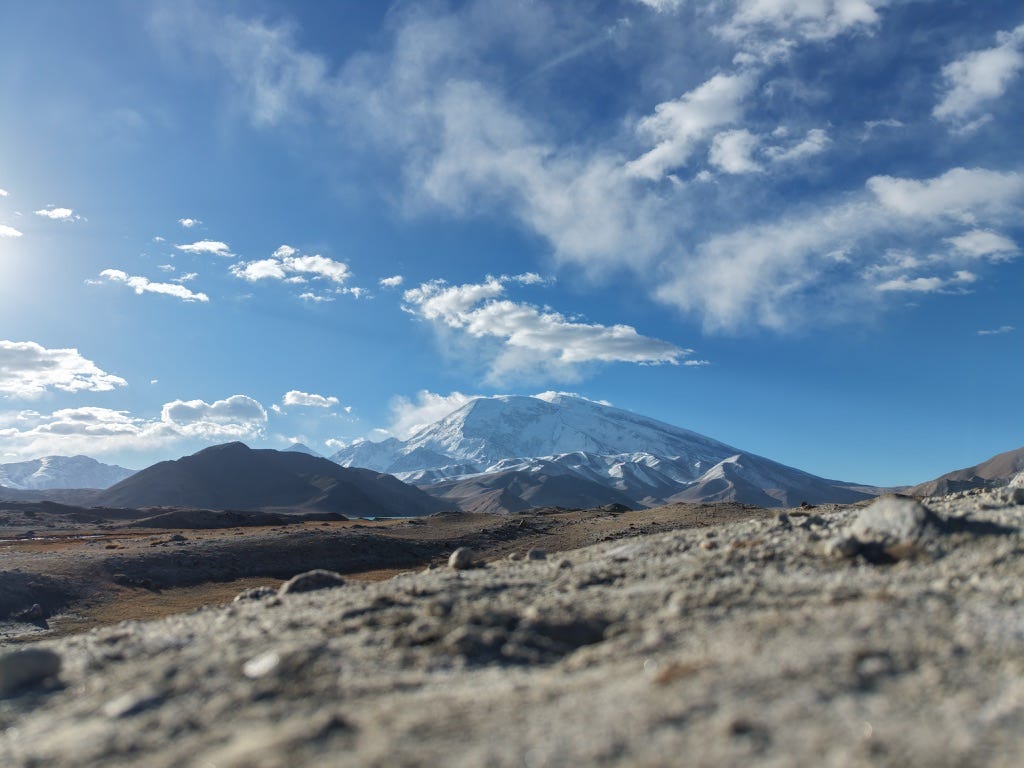
After so many kilometres through western China, the landscape could still overwhelm us.
That feeling returns when we think about Xinjiang. The scale of the desert. The people who have made their lives within it. The cultures carried along its edges. And then the mountains.
Blue, green and an eye in the desert
The salt lakes of Qinghai begin to rearrange your expectations early in the journey.
Blue water. Green water. White salt along the shore. Vast stretches of desert surrounding colours that seem almost improbable in such a dry landscape.
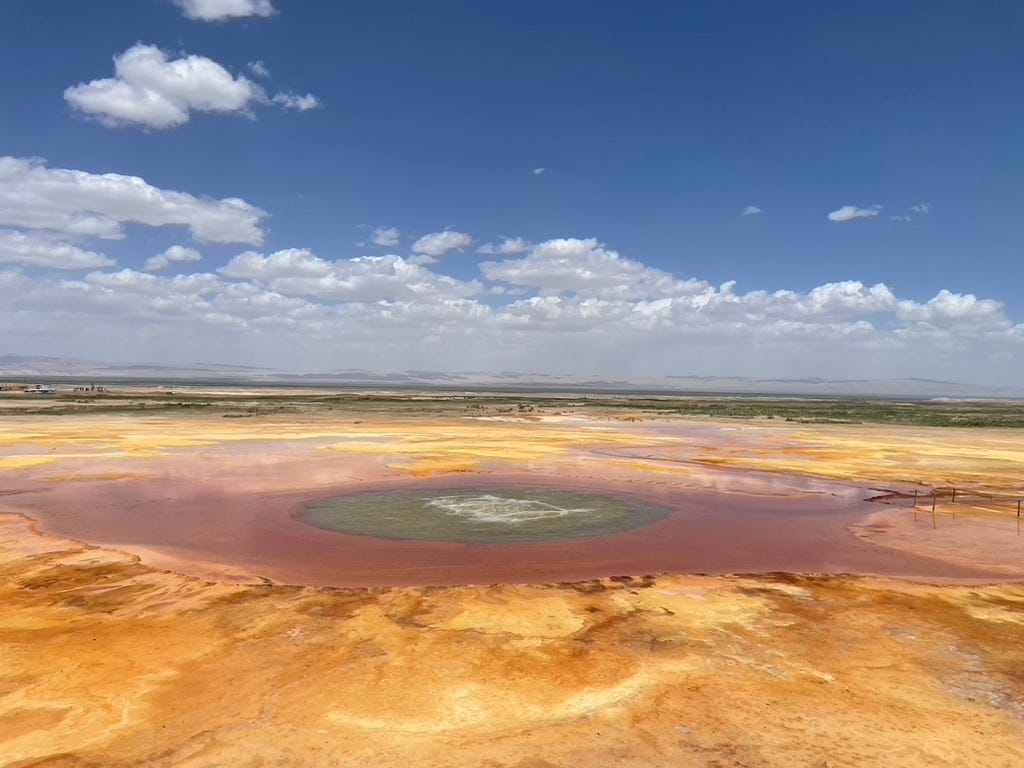
Near Mangya, Aiken Spring adds another palette. Known as Devil’s Eye, the hot spring spreads colour across the ground around it, making the earth itself look strangely alive.
We have learned to allow time for these places. The colours and the sheer strangeness of the setting can turn a short stop into a long one.
Centuries gathered along the road
Along the southern edge of the Taklamakan, the road passes through a landscape that has carried travellers, beliefs and goods for centuries.
At Milan, also known as Miran, the ruins bring the southern Silk Road into view. The site’s Buddhist frescoes, shrines and later Tibetan fort belong to different chapters of its history.
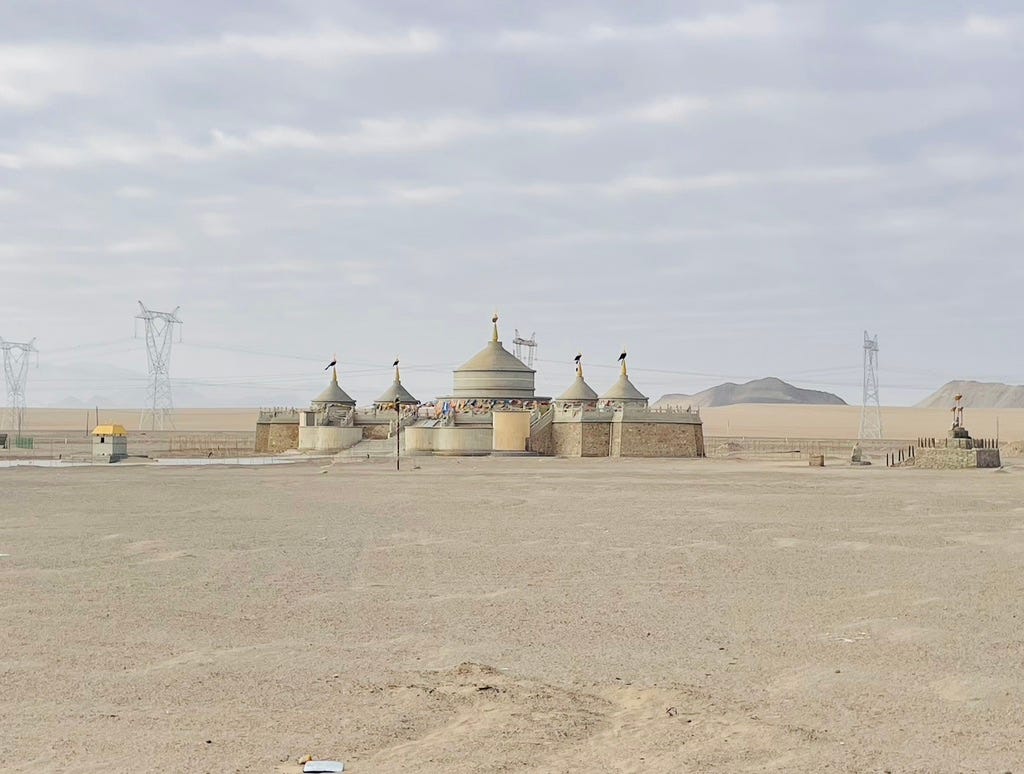
Buddhism, Christianity and Islam all spread through the wider Silk Road networks. Travelling here gives a physical setting to that history of movement and exchange.
In the Loulan Museum at Ruoqiang, ancient mummies bring another kind of proximity. A human face preserved across millennia can make the distance between ourselves and the past feel surprisingly short.
The road carries you through great spaces, while these encounters bring you close to individual lives.
The man who stayed
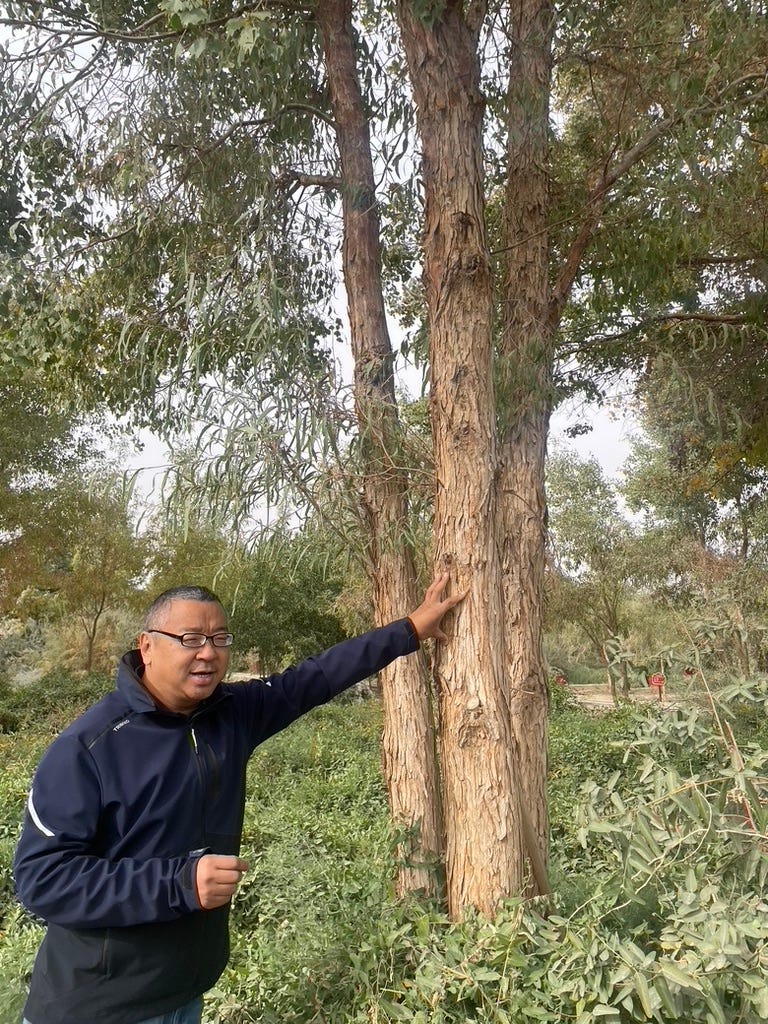
Deep inside the Taklamakan, we met Mr Zhang.
He had come to Tazhong to work in oil exploration around twenty five years ago. He stayed, making a life in a place whose position on the map had initially seemed reason enough for us to go and investigate.
His collection of desert vehicles, the abandoned airstrip laid across the sand and the nearby plant research give this small settlement an unexpected range of stories.
Mr Zhang knows how people live here, how vehicles cope with sand and how plants survive. With him, the immense desert acquires names, histories and familiar places.
His decision to remain here has become one of the stories we remember most clearly.
Coffee in bread and silk on the loom
The oasis towns bring their own pleasures.
Hotan carries the long story of jade, with people searching the riverbed for stones. Yarkant brings workshops, markets, knife makers and Atlas silk, whose colours and patterns can hold your attention as effectively as a desert lake.
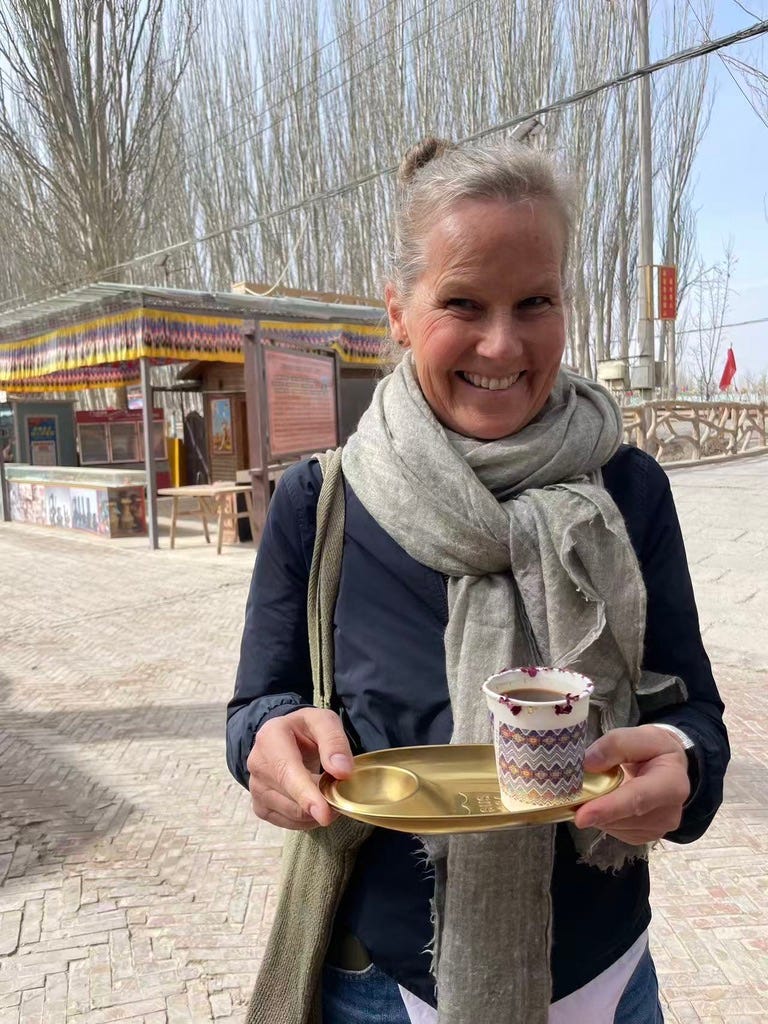
Then there is the food. Coffee served in bread is the sort of detail you remember and find yourself trying to explain later. Lamb appears with gratifying regularity. A meal becomes another opportunity to stop, look around and spend time in a place.
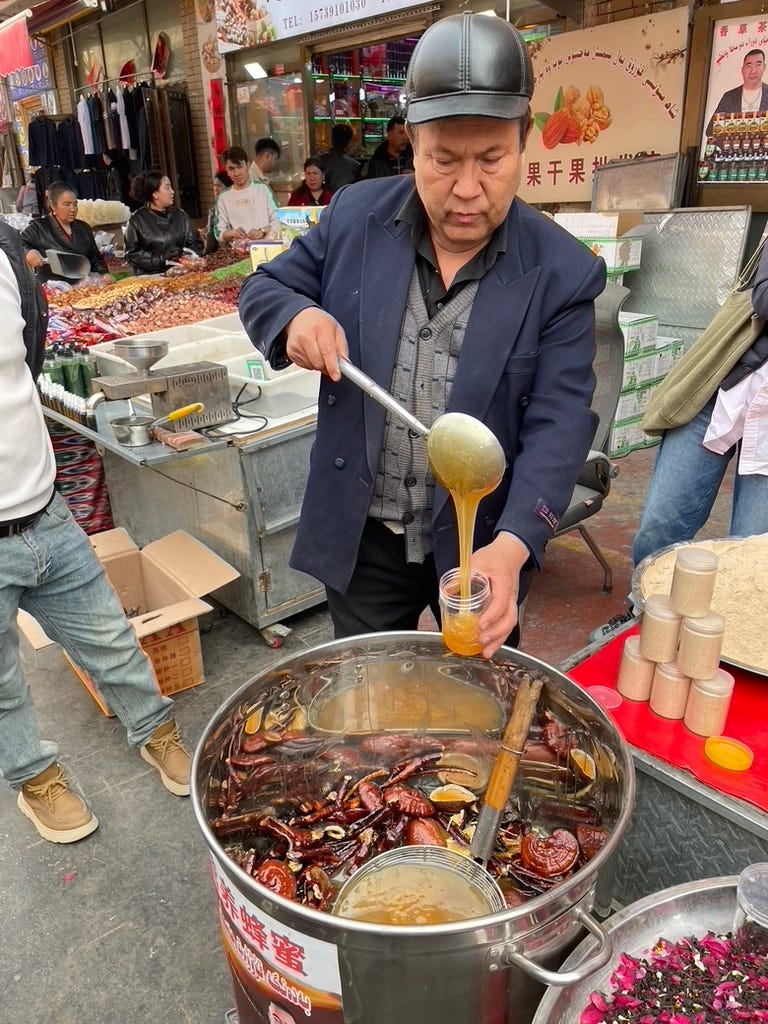
We enjoy the old crafts particularly. Watching someone work changes your relationship with an object. A knife or a length of silk begins to carry the time and skill of the person who made it.
The city we keep thinking about
Kashgar has an extraordinary pull. Its old town, bazaars, pigeons and livestock market give the journey another density of sights and sounds. The city’s Uyghur culture opens a further perspective on what China can feel like.
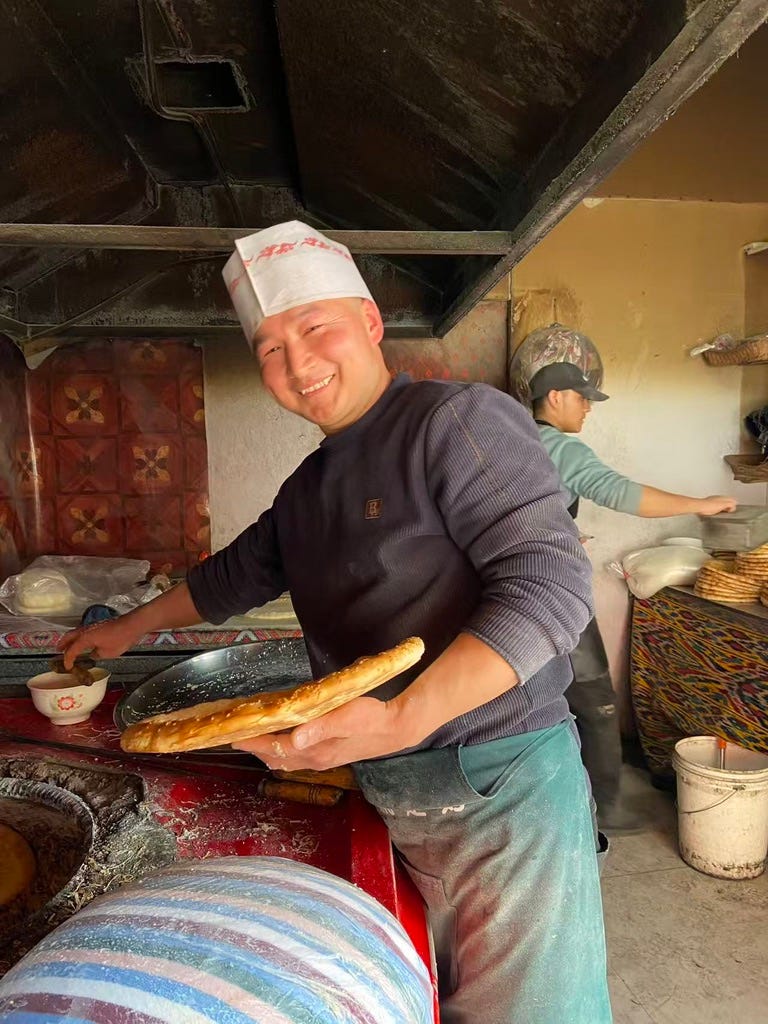
Our own affection is especially strong in Yarkant. To us, it feels more rooted in its everyday life. We enjoy joining the rhythms of the town through its workshops, food and conversations. This is a personal preference that has grown through our earlier journeys.
Kashgar remains an important part of the route. It is also the gateway to two landscapes that have left a particularly strong impression on us.
An opening in the mountain
Shipton’s Arch is recognised by Guinness World Records as the world’s highest natural arch.
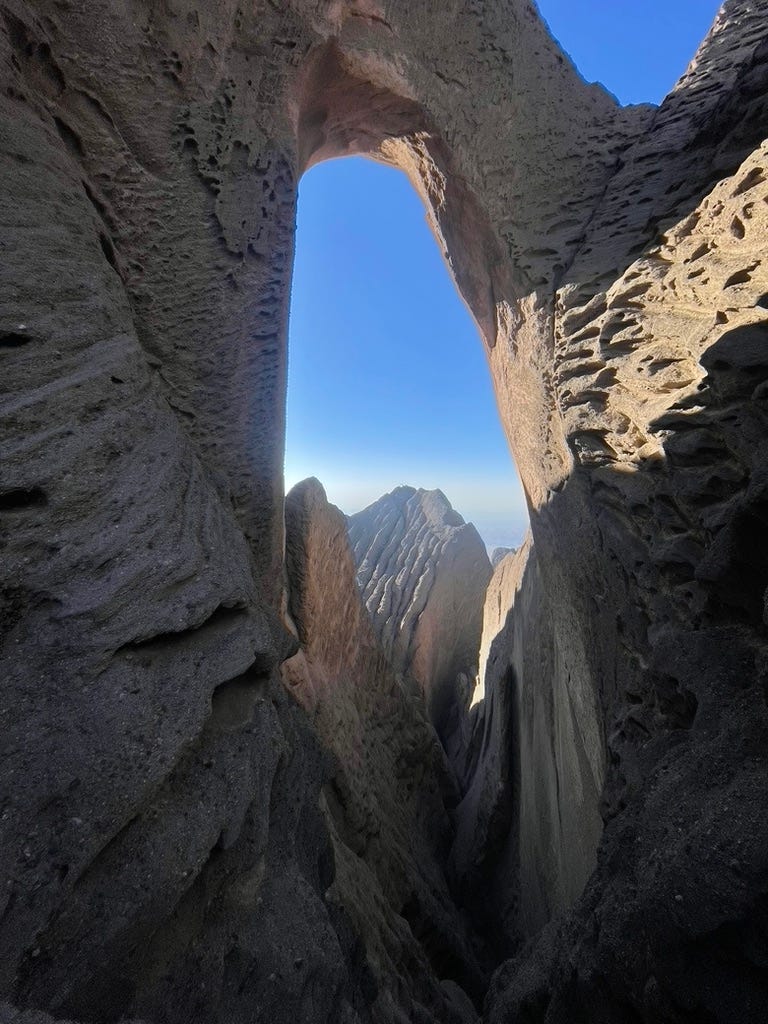
On our own visit, the drone footage helped us appreciate the formation’s dimensions again when we watched it afterwards. The mountain setting and the immense opening within it continued to reveal themselves after we had left.
Where the road rises into the Pamir
Beyond Kashgar, the road climbs towards lakes, high valleys and the glacier covered slopes of Muztagh Ata.
This was the landscape that brought us to tears and made us want to prolong every stop.
Our explorations took us towards the borders with Pakistan and Afghanistan. In the highlands, encounters with Tajik hosts and their homes gave these extraordinary landscapes a human warmth that we remember just as vividly.
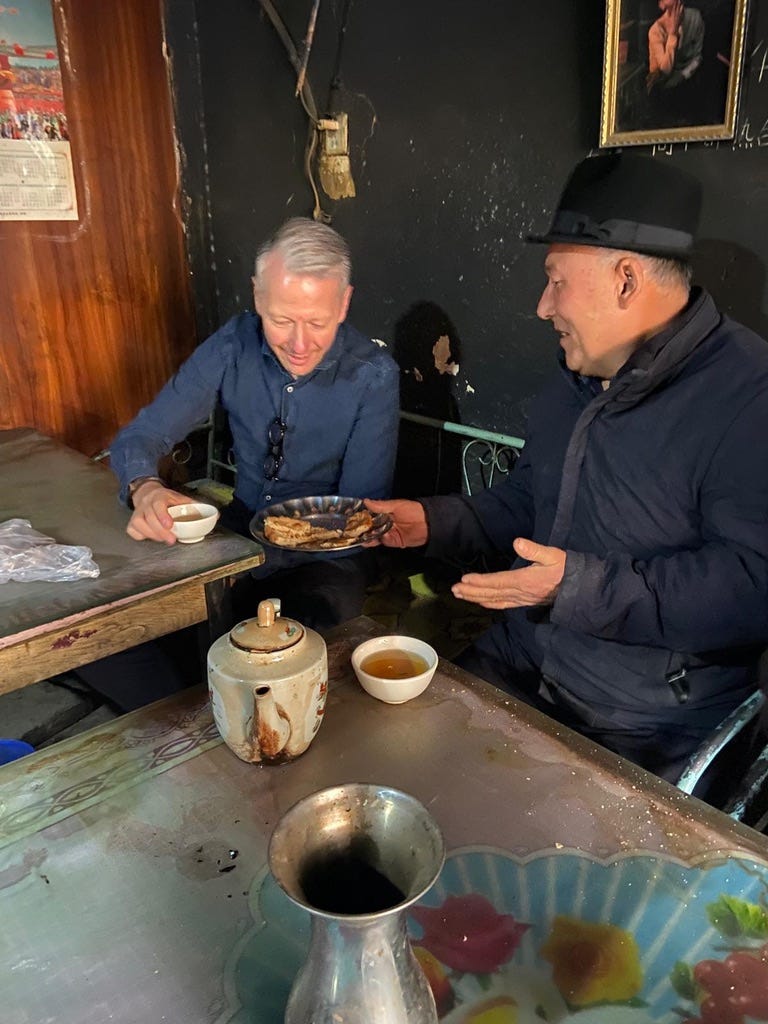
For Andrea and me, this is what makes the far west so rewarding. The beauty of a place and the lives within it become part of the same memory.
Fifteen days to let the road unfold
These experiences shape our private journey of fifteen days and fourteen nights, beginning in Golmud and ending at Kashgar airport.
Begin among Qinghai’s salt lakes, with a night at Lonely Space Gobi Wild Luxury Hotel, whose architecture has the feel of a moon base in the desert. Continue through Mangya and Ruoqiang, with Milan and the Loulan Museum along the way.
Two nights in Tazhong leave a full day to explore with Mr Zhang. Niya divides the driving distance before we continue through Hotan and Yarkant, taking time for jade, workshops, silk and the life of the oasis towns.
In Kashgar, we stay for two nights in a homestay in the old town. We aim to arrange the dates around the Sunday livestock market, with Shipton’s Arch also included.
The final part leads into the Pamir. Two nights in Tashkurgan provide a base for the highlands, Khunjerab Pass on the border with Pakistan and the winding Panlong mountain road. The last night is beside Karakul Lake.
The following morning, return to Kashgar airport for an agreed flight from early afternoon onwards.
Comfort shaped by the landscape
For most nights, we choose modern middle class hotels, often newer properties belonging to established Chinese groups. Many have washing machines, a practical pleasure during a longer road journey.
Tazhong offers simple, clean accommodation with a private bathroom in every room. In Kashgar, the homestay places us within the old town.
Some days involve longer drives. We plan them carefully and discuss the route, pace and high mountain section with you before booking.
A journey to carry with you
Andrea and I personally design and guide the journey. We offer it from April to October, adapting the daily programme to the season and local access conditions.
The price is EUR 3,650 per person for four guests sharing two double rooms, or EUR 5,400 per person for two guests sharing one double room.
It includes all fourteen overnight stays, planning and personal guidance, a driver and suitable vehicle, all vehicle costs and vehicle insurance, all meals and drinks except alcohol, entrance fees, required permits and oxygen for the high mountain section. Collection in Golmud and the final transfer to Kashgar airport are included.
Travel to Golmud and onward from Kashgar, any required visa, personal travel medical insurance and alcoholic drinks are additional.
This is a journey you might make once and carry with you for the rest of your life. For us, its lasting attraction lies in how much it opens up, in landscapes, encounters and your own understanding of China.
Explore our Xinjiang and Pamir journey
If this feels like the journey you would like to make in 2027, tell us your approximate dates and who will travel. We will arrange a personal video call and shape the route together.
Andrea and René
China Serendipity
Thank you for reading The China Serendipity Letter.
Wonderful writing about an amazing part of the world. Xinjiang and western China has been on my bucket list for a while! Thanks for sharing this.