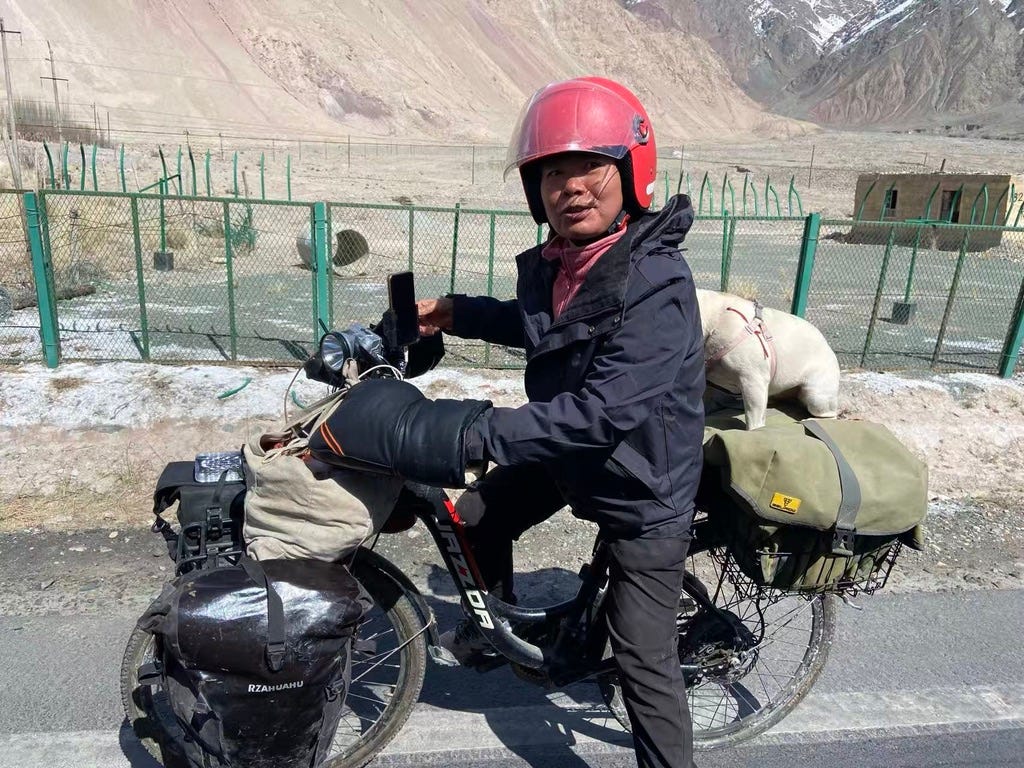
A man from Beijing crossing the desert on a motorbike with two dogs is an excellent reason to stop.
You want to know where he is going. How the dogs are enjoying it. What persuaded him to set off in the first place. A few minutes earlier, you were thinking about the distance to your hotel. Now there is someone beside the road whose journey has become interesting enough to interrupt your own.
For Andrea and me, this possibility explains much of our attachment to travelling through China by car. Together with our guests.
Curiosity deserves a little room in the day. On the roads of western China, we have learned to leave quite a lot.
The view has already disappeared
China’s fast trains are a pleasure. Comfortable seats, remarkable speed and the ease of watching great distances pass make rail travel an appealing part of a visit.
In the mountainous west, the view can also be tantalising. A valley opens, a village appears, a river catches the light. Then comes another tunnel. By the time you have become properly curious, the place has disappeared.
We know that small frustration well. There is something outside the window that deserves your attention, and the timetable carries you onwards.
On our road journeys, we choose the route partly for what it allows us to see. We leave the motorway where a smaller road promises something worth the time. A mountain can remain in view long enough for its shape to become familiar. A river accompanies us through a valley. We can pull over when a landscape asks for a longer look.
The journey begins to acquire its own meaning.
China unfolds at the roadside
Travelling through western China by road gives you time to notice how places belong together.
As you climb, vegetation changes. Houses take on different forms. Fields give way to grazing land. The food at lunch carries something of the country you have spent the morning crossing. Distance becomes tangible, and geography begins to explain everyday life.
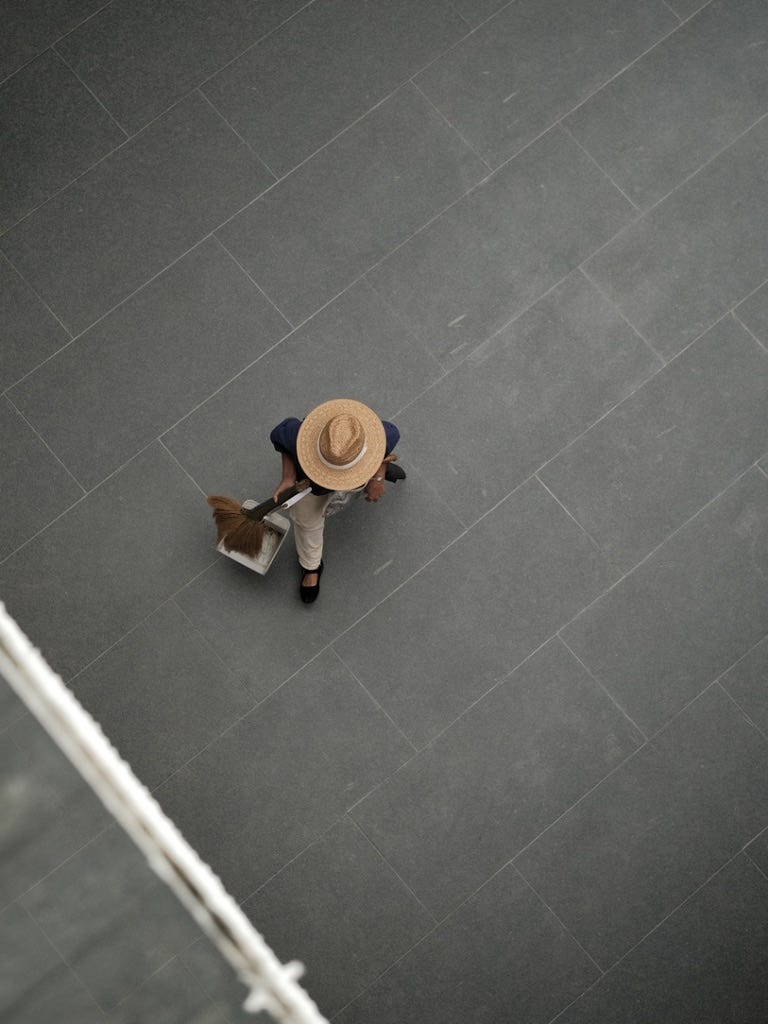
Then something catches your eye.
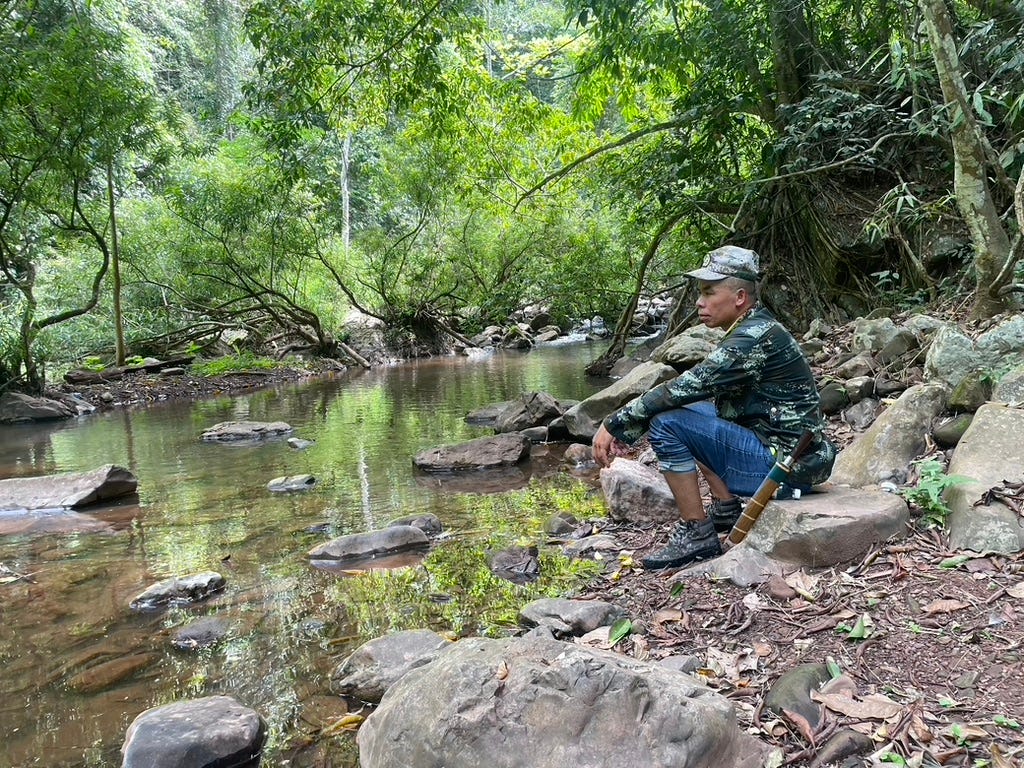
Yaks beside the road. Horses across the grassland. Vultures gathered on a slope. Further west, camels in a landscape whose scale takes time to absorb.
We stop, find a place to stand and let our eyes adjust to the distances.
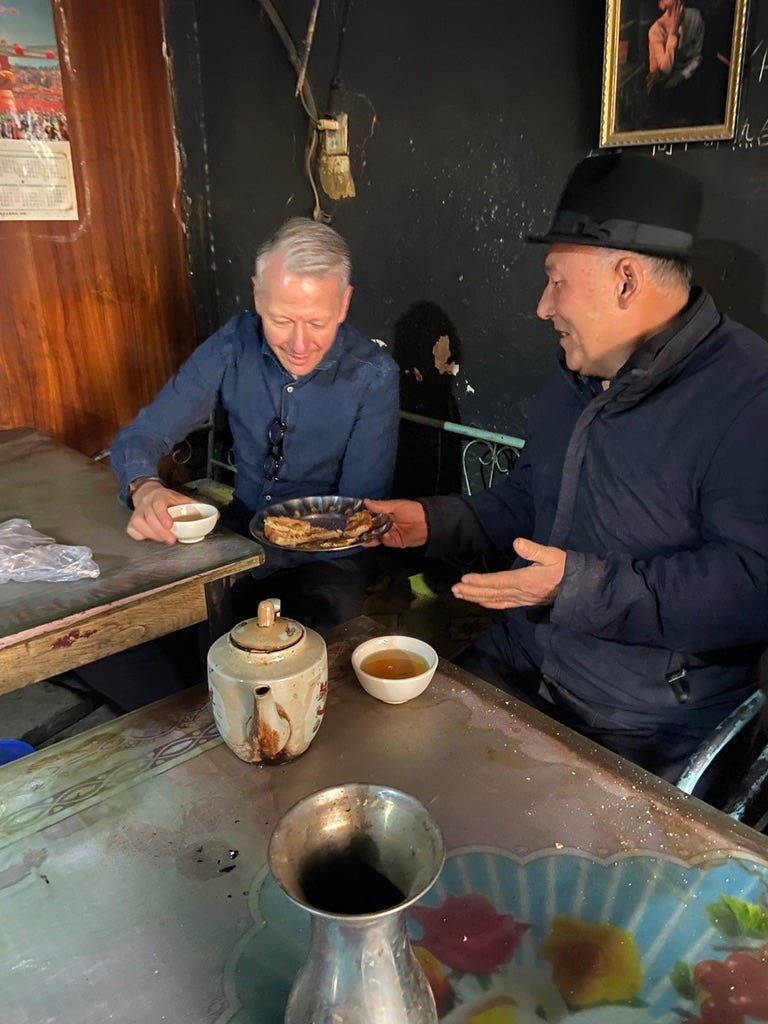
Other stops begin with people. A meal with a local family introduces dishes we have never encountered. A small monastery invites a quiet visit. A prayer wheel becomes a reason to spend time in a village we had barely noticed on the map.
Each encounter has its own pace. A conversation may last five minutes or occupy much of the afternoon. The freedom to stay allows interest to develop into understanding.
Tomorrow can be decided over dinner
There is a particular pleasure in discovering that a journey still belongs to you.
Perhaps the hotel is so good that you would like another two nights. A longer driving day could make that possible. Perhaps everyone would welcome a quieter morning, or a place we passed deserves a return.
These are conversations we can have over dinner.
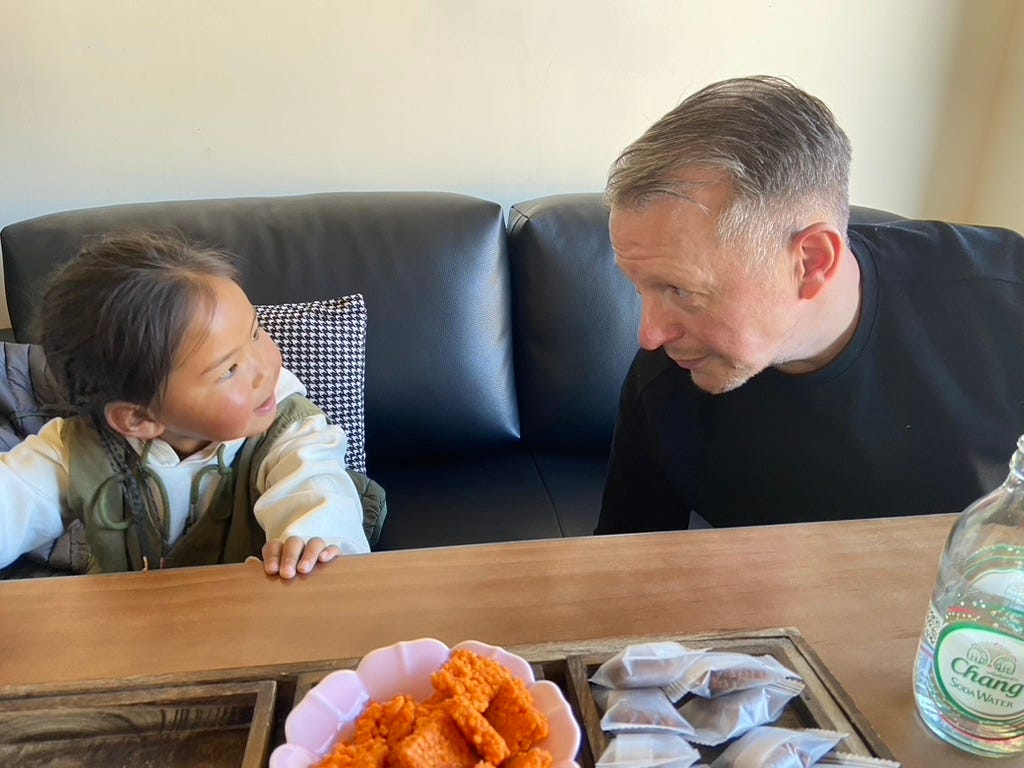
Our groups are small enough for everyone’s wishes to enter the discussion. Andrea and I are there ourselves, with the knowledge of the route needed to consider what a change involves. We can look at the distances, check what is possible and reshape the coming days together.
For people whose working lives require decisions weeks in advance, this freedom can feel unexpectedly generous. You can discover what you want while you are already travelling.
Your curiosity has the right of way
Everyone sees a different journey through the same window. A photographer notices the light across a mountain ridge. Someone else becomes absorbed by an improbable roadside invention, a remarkable bridge or the face of a person watching us pass.
We enjoy these differences. They make travelling together interesting, and each deserves room in the day.
When something catches your eye, tell us. We stop wherever it is safe to pull over. There is no group vote to establish whether your fascination is sufficiently important. You have time to step outside, find your angle and take the photograph you had in mind. Sometimes the most interesting detail only becomes visible once you have stopped.
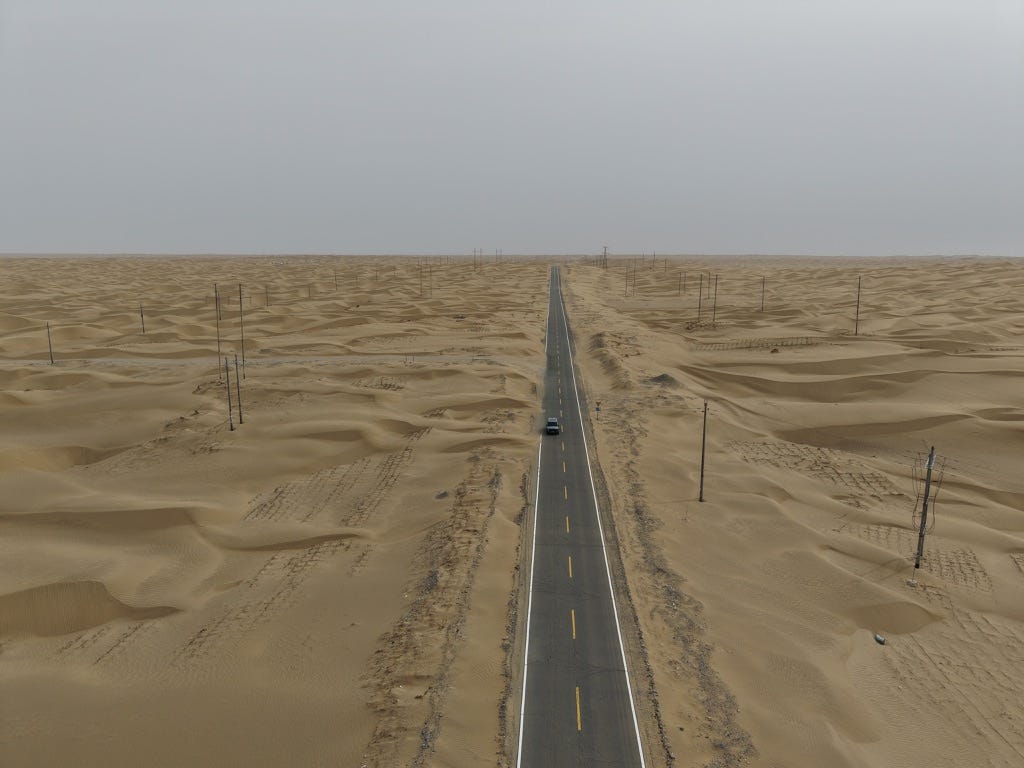
We also like to send up the drone and let it follow a stretch of our route. From above, the bends reveal their relationship to the river. Our car becomes a small moving point, and the landscape acquires a scale we could barely grasp from the road.
For a moment, we can see ourselves inside the journey.
That freedom to follow your own attention is part of what makes the experience yours.
Freedom takes preparation
We spend considerable time on the roads before bringing guests along them. We drive the stages, inspect the hotels and consider where the journey needs a pause.
That knowledge gives us confidence to leave room in the plan. We understand what a longer day asks of our guests and where an additional night can make the experience richer.
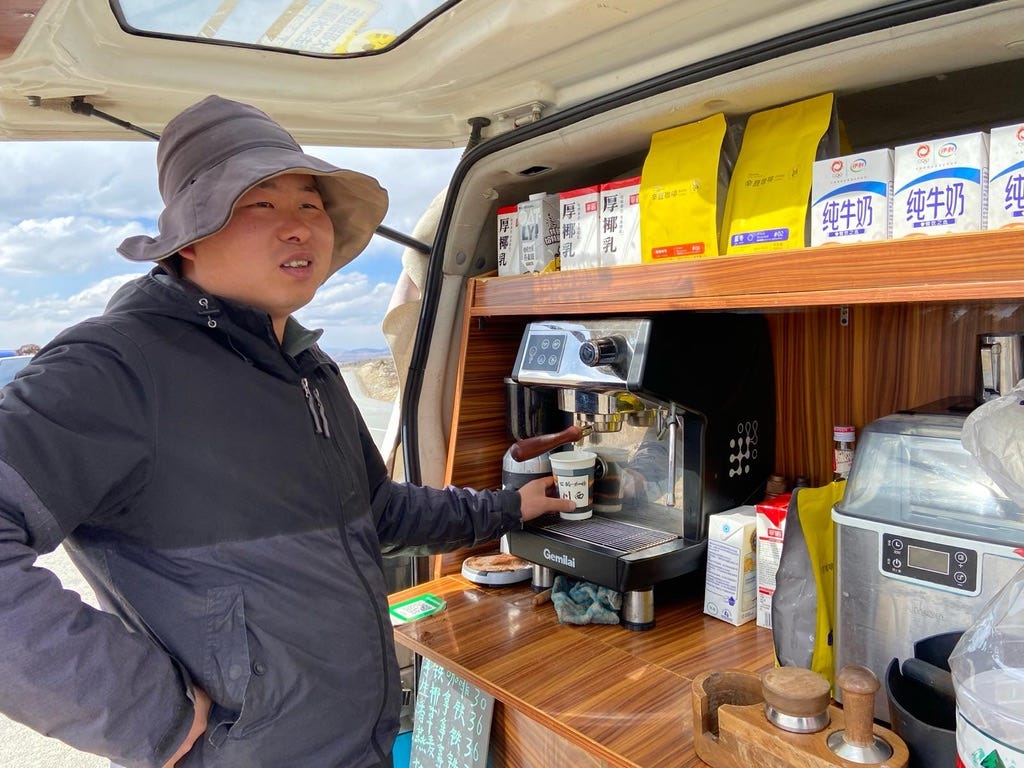
Comfort matters throughout. A beautiful room, a good dinner and the prospect of an unhurried morning give a long journey its rhythm. So does the confidence that someone has thought carefully about the practical details.
Within that preparation, there is space for the man with the two dogs.
We think of this as a very personal kind of luxury. Your attention has somewhere to go, and your day has room to follow it.
If you are beginning to imagine your own road through western China, reply to this letter. Andrea and I would be glad to explore a few possibilities with you.
Andrea and René