

In the summer of 2023, Andrea and I were living in Fujian Province on China’s east coast when we became captivated by a rather ambitious idea. We wanted to drive our own car from China to Berlin, following the roads westwards across Central Asia and Europe. For months, we prepared the journey. We arranged insurance, applied for visas and gathered the transit documents required for around twelve countries. The route stretched across the map like a promise. All we had to do was start driving.
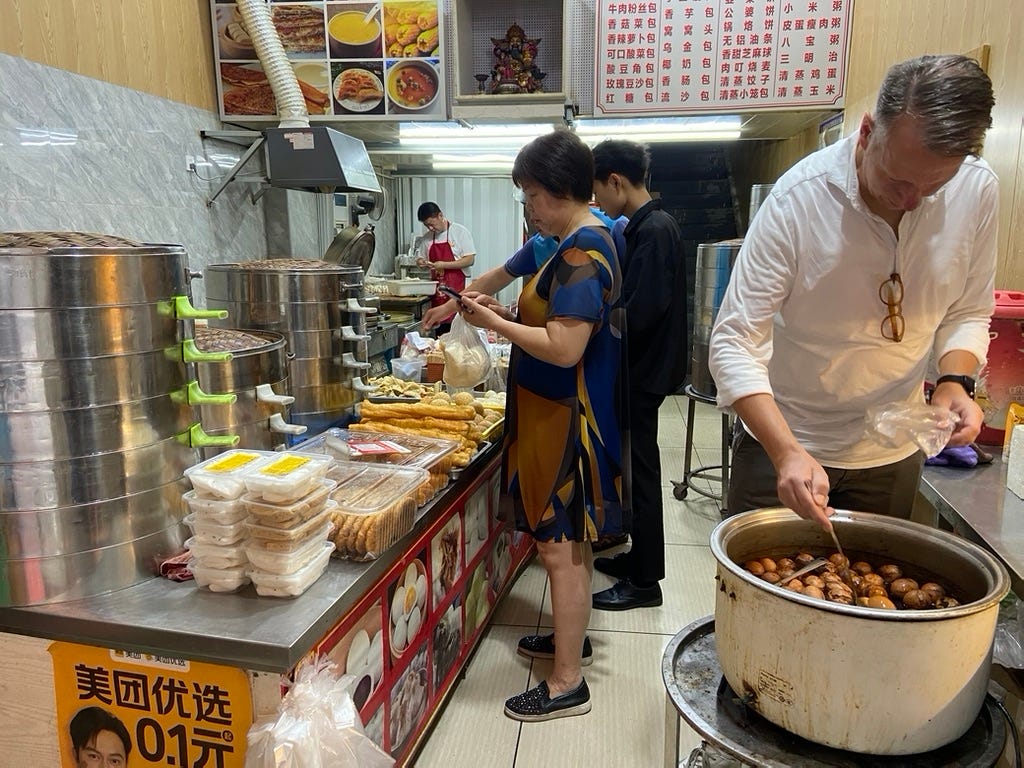
(Last stop for breakfast before heading off to Berlin by car from Fujian, East China)
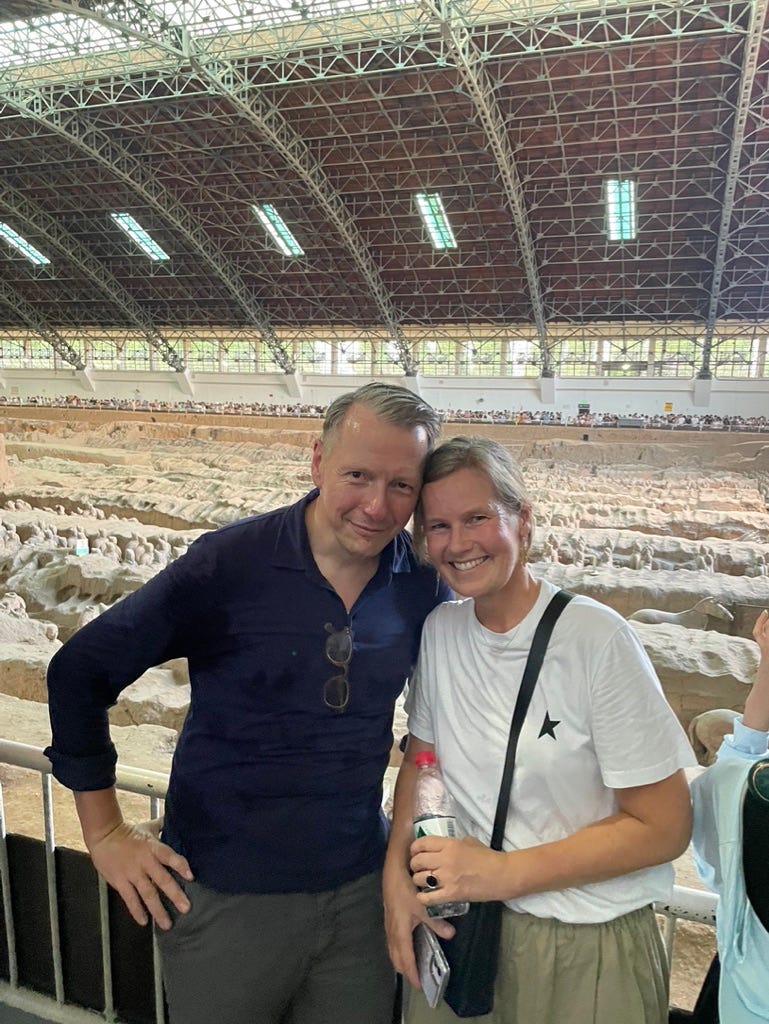
(An intermediate stop in Xi’an to see the Terracotta Army. What you can see behind us is only a fraction of the entire site. Most of the warriors have yet to be excavated.)
We left Fujian and crossed China from east to west. For more than a week, the road carried us across a country whose dimensions are difficult to grasp from a map. After more than 5,000 kilometres, we finally reached the first international border of our journey, the crossing between China and Kazakhstan. Berlin was still thousands of kilometres away, yet this felt like the moment when the great journey would truly begin.
It was also the moment when it ended.
Among all the documents we had carefully assembled, one paper was missing. Our car required an additional export document before it could leave China. We were free to walk across the border into Kazakhstan. The car had to remain behind. For the officers, the situation was perfectly clear. For us, standing there after 5,000 kilometres of driving and months of preparation, it felt almost absurd.
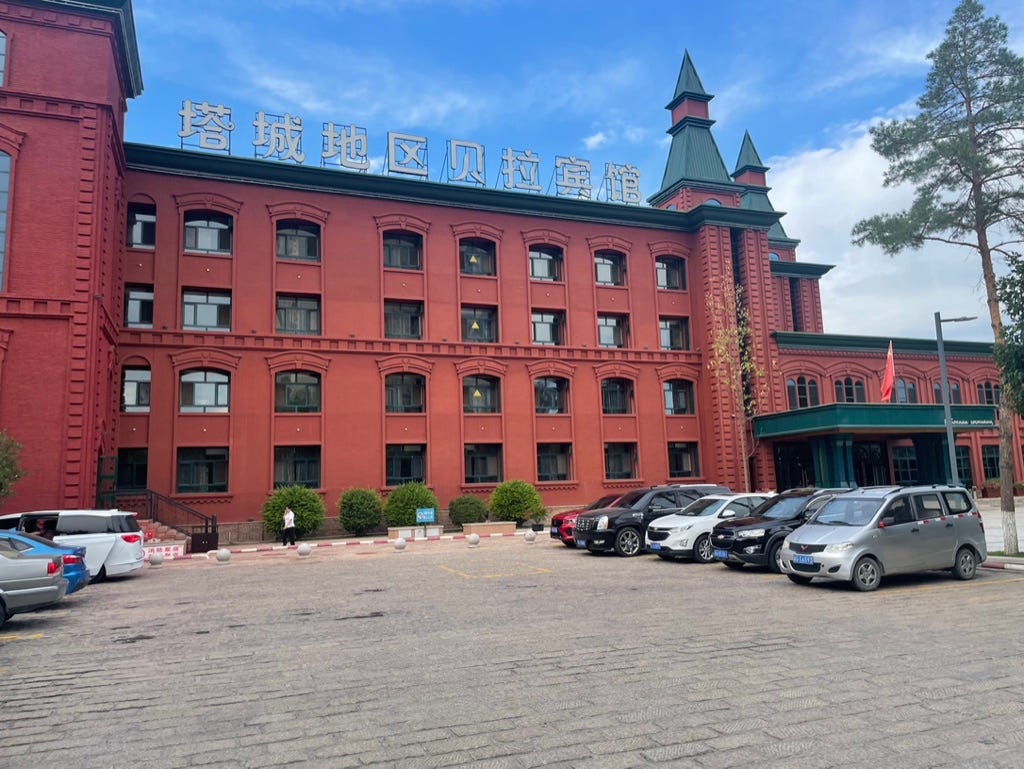
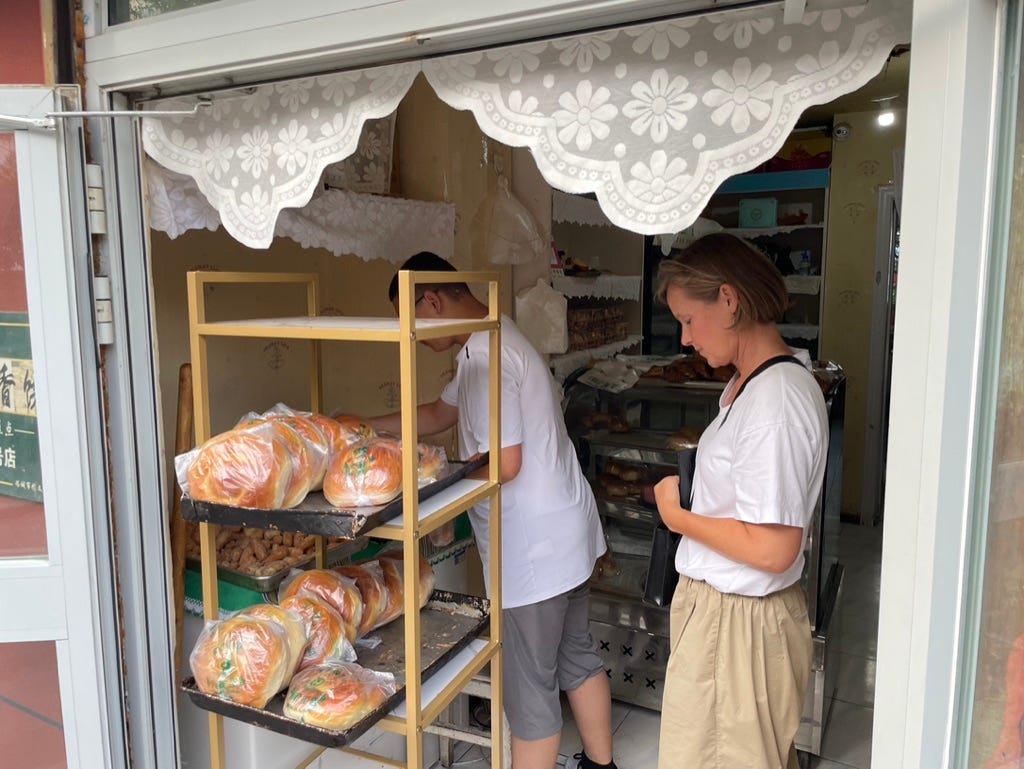
(Close to the border to Kazakstan - where China already looks like central Asia.)
We began making calls. We contacted authorities, searched for the responsible office and tried to find somebody who could issue the missing document. Every conversation led to another number, another explanation and eventually another dead end. There was no solution available at the border, and there was no realistic way to obtain the paper within the time we had.
That evening, we mourned our journey. We had crossed the entire width of China and had failed before crossing a single international border. The car that was supposed to take us to Berlin was still standing on Chinese soil, facing west, while the road beyond the checkpoint remained closed to it.
By the following morning, the disappointment had begun to make room for another thought. We had reserved six weeks for travelling, and China was surely large enough to fill them. We had already driven more than 5,000 kilometres through the country, yet there was still so much we had never seen. A new route slowly emerged. We would turn south, travel through western China towards Hong Kong, leave the car in Shenzhen and fly to Germany. On our return, we would collect it and drive back to Fujian.
It began as a practical answer to a very impractical problem. It became one of the most consequential decisions we have made in China so far.
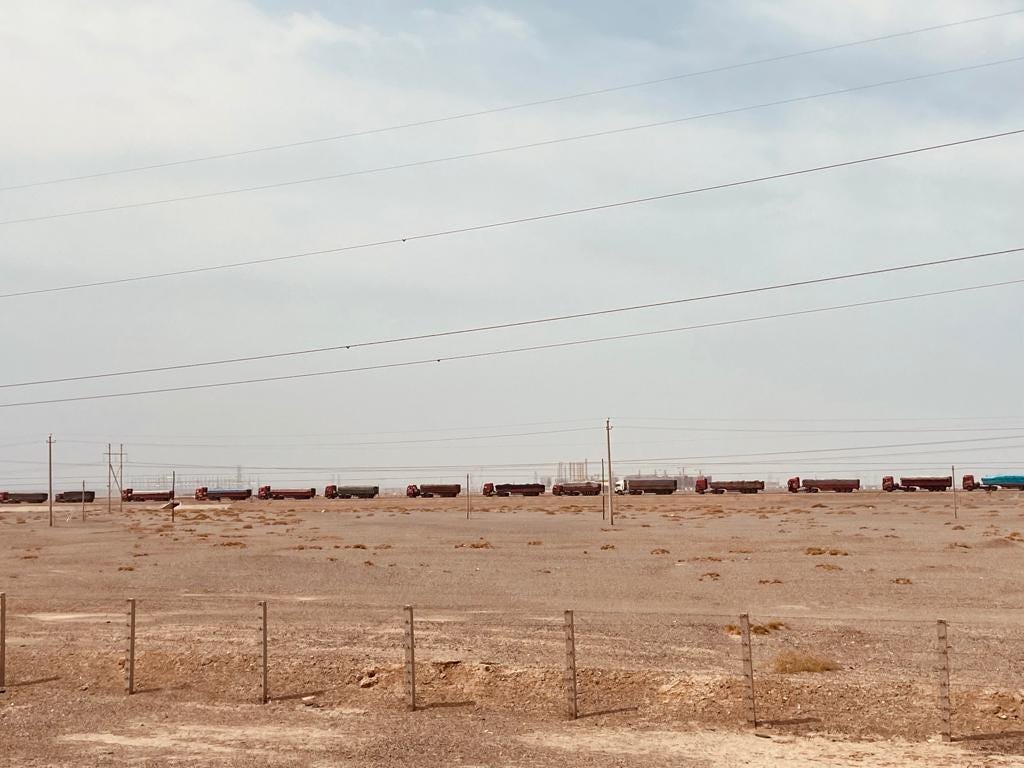
(Crossing the Taklamakan desert ….
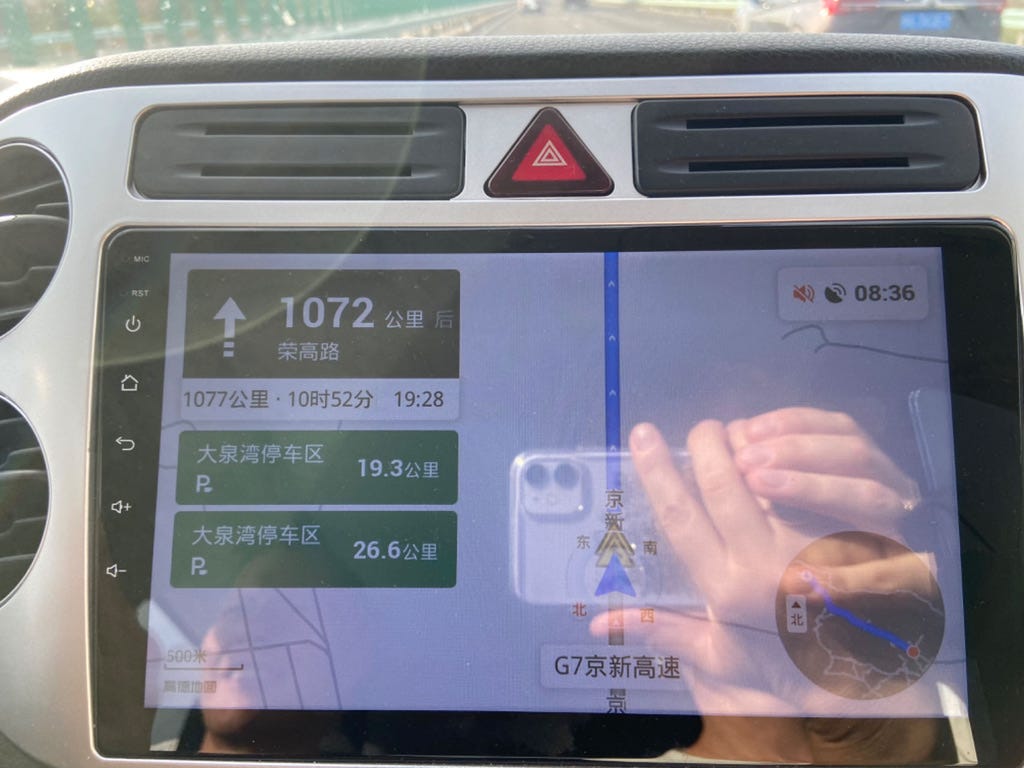
… where your satnav tells you to take the next exit in a thousand kilometres.)
Over the following weeks, we began to understand, kilometre by kilometre, what China offers as a travel destination. The further we travelled through the west, the more the country changed around us. Deserts opened towards distant mountain ranges. Fertile valleys rose into high plateaus. Great rivers cut through landscapes that seemed to have been designed on a continental scale. Beyond each pass, the food, architecture, language and rhythms of everyday life shifted again.
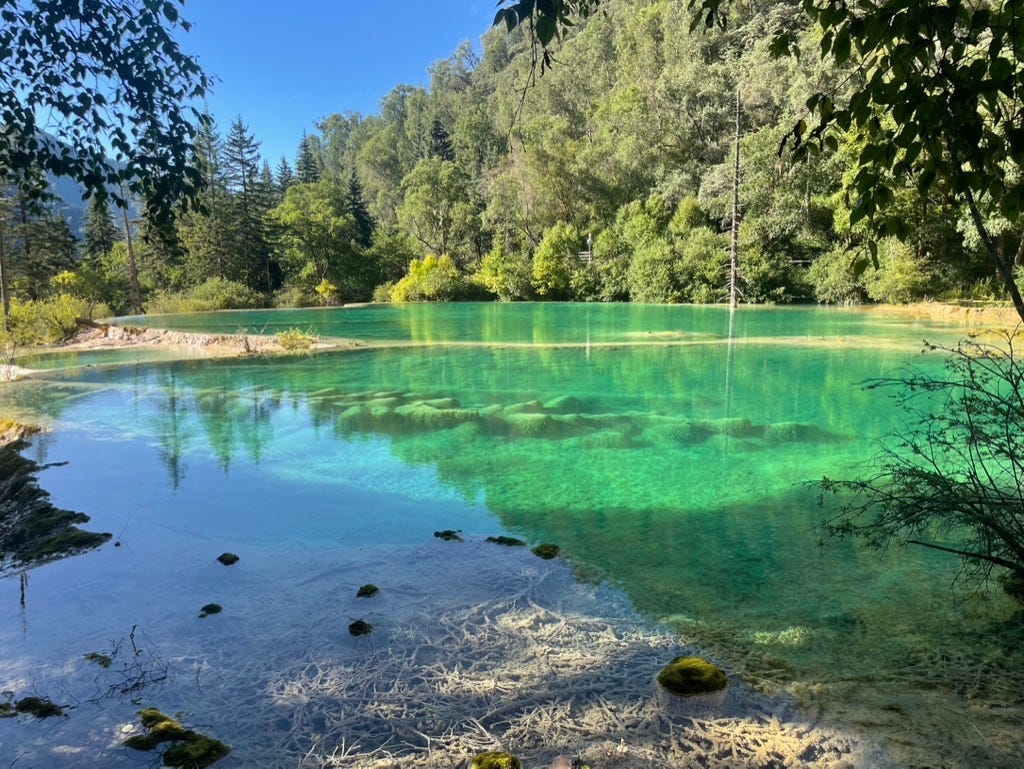
(Jiuzhaigou, north of Chengdu, Sichuan)
The road allowed these transitions to unfold gradually. A flight would have carried us from one destination to the next within a few hours. Driving gave every landscape a beginning and an end. We could watch vegetation disappear as the altitude rose, follow rivers towards their sources and see how geography shaped villages, agriculture and daily life. China became less abstract with every kilometre. It also became larger, more diverse and more surprising.
Travelling by car changed our rhythm. We could follow a smaller road because it looked interesting, turn around when we had passed something worth seeing and stop when a view demanded more than a photograph through the window. A brief exchange at the roadside could grow into a conversation. A recommendation over lunch could alter the afternoon. A barely visible turn off could lead towards a valley, a monastery or a village that had never appeared in our original plan.
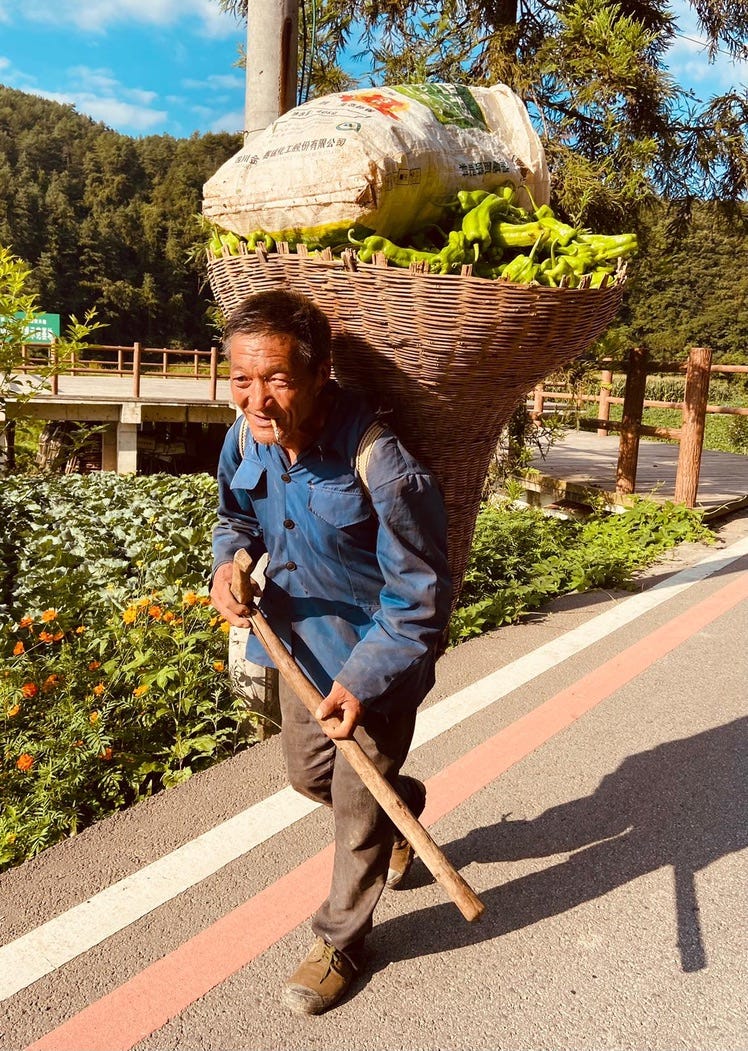
(Farmer with hot green peppers in Sichuan)
Again and again, one question followed us along the road. How could a country be this beautiful, this varied and still so little known among our friends, colleagues and business partners?
International perceptions of China are often formed in Beijing, Shanghai and Shenzhen, alongside the country’s best known historic sights. Western China reveals dimensions that rarely enter the familiar image. There are remote valleys where geography continues to define everyday life, villages in which different cultures and religions have coexisted for centuries, and landscapes shaped by tea forests, vineyards, glaciers, deserts and some of Asia’s great rivers.
There are also remarkable hotels in places where few international travellers would think to look. There are small restaurants where the food explains the surrounding landscape more vividly than any guidebook. There are encounters with people who are living their lives, with no stage, performance or prepared programme for visitors. These moments arise through time, openness and the willingness to remain curious.
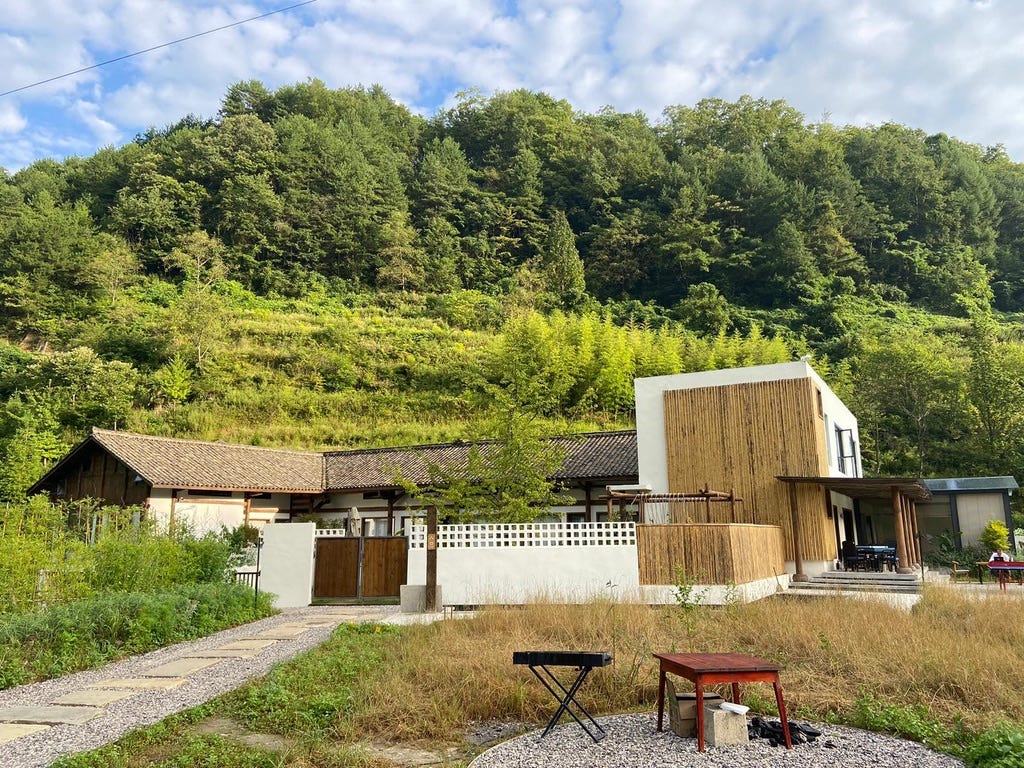
(Homestay in a remote village in Guizhou)
The further we travelled, the more an old idea returned to me.
Create a room for serendipity.
Years earlier, I had used this phrase in my work as a consultant. During workshops on organisational development, it described the value of creating enough openness for an unexpected idea to emerge. On the roads of western China, the phrase acquired a more tangible meaning. A journey needs direction, careful preparation and knowledge of the terrain. It also needs space for something unforeseen to enter.
Serendipity cannot be placed on an itinerary. The conditions for it can be created.
That idea became China Serendipity.
Since that first journey, Andrea and I have driven many thousands of kilometres through Yunnan, Sichuan, Qinghai, Xinjiang and other parts of western China. We scout every route ourselves, drive each stage and personally inspect the places where our guests will stay. We learn where a long day on the road becomes rewarding, where another hour adds something valuable and where the route needs more time, more quiet or a better place to arrive.
Our journeys are carefully prepared while remaining flexible enough for discovery. We know the destination and understand the road ahead. We also keep our eyes open for the almost invisible turn off, the mountain farmer who begins a conversation, the unfamiliar sound from a courtyard or the landscape that suddenly changes the rhythm of the day.
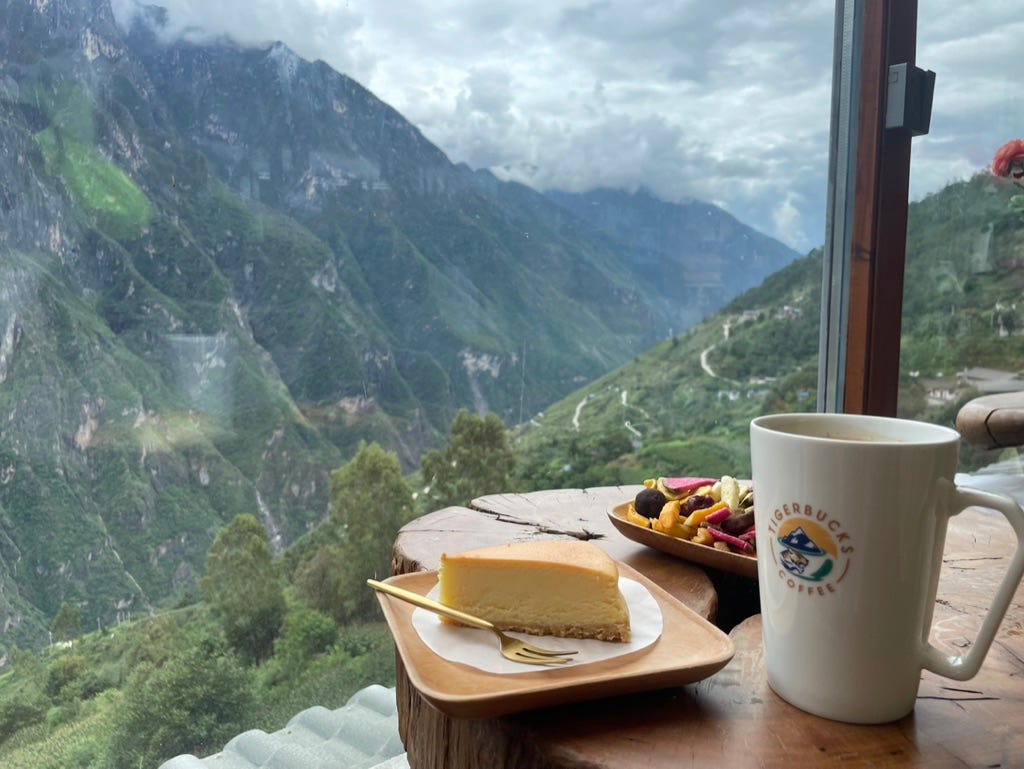
(Coffee with a view in North Yunnan)
This is where serendipity meets serenity.
The freedom to explore becomes a form of luxury when someone has already considered the road ahead. In western China, luxury may mean a beautifully designed lodge overlooking a mountain range. It may be a quiet room after crossing a demanding pass, a warm meal in an unexpected place or the reassurance that there is no need to hurry. It is found in access, attention, calm and the rare privilege of experiencing something that may never happen in quite the same way again.
From this Wednesday onwards, The China Serendipity Letter will take you with us. Each week, we will follow one road, explore one place or share one encounter from the lesser known regions of western China. We will write about spectacular landscapes, remarkable people, unexpected hotels and food that tells you where you are. Above all, we will share the moments that became memorable because the journey had left enough room for them to happen.
(Evening mood at ErHai Lake, Dali, Yunnan)
The road to Berlin never carried us beyond that first border.
Looking back, the closed road led us towards a far more exciting journey. It continues today.