Azara is a remarkable place to spend two nights doing very little.
Industrial design in the middle of the highlands. Grassland stretching in every direction. Green all the way to the horizon, with the feeling that it continues well beyond anything you can see.
The surroundings give this hotel its particular appeal. You have somewhere beautiful to stay, and an enormous amount of space around you. You can spend an afternoon looking out across the grass and feel entirely satisfied with the decision.
Then comes the silence. At night, when the sky is clear, the stars give you another reason to stay outside.
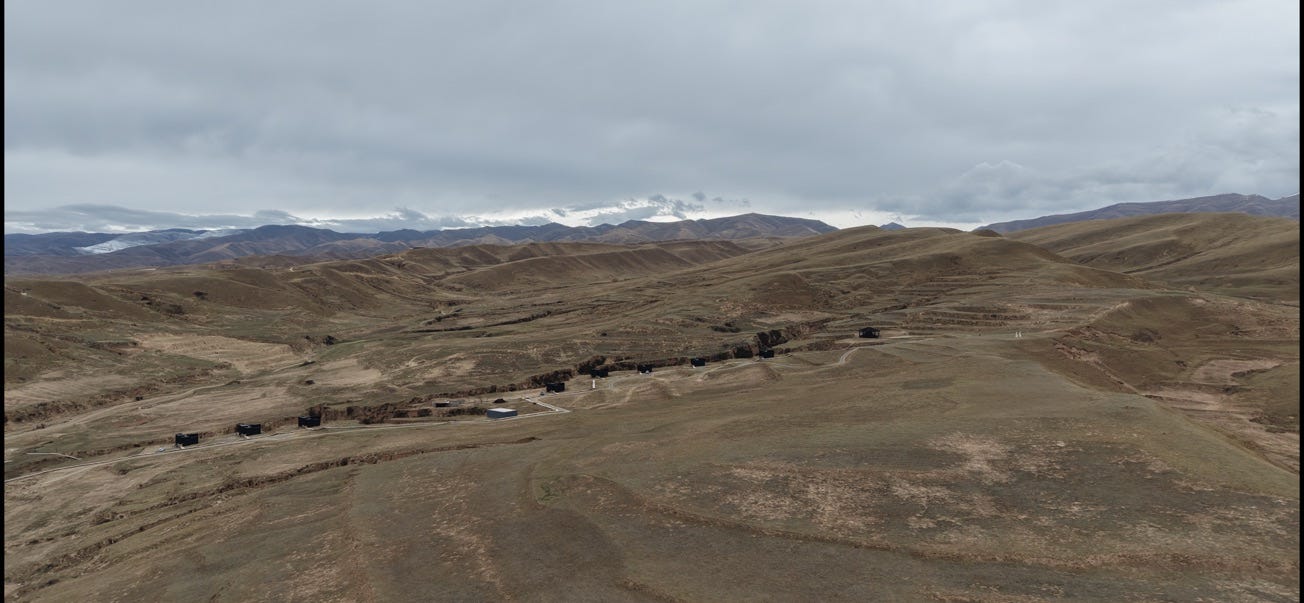
In What Green Does to the Soul, we wrote about the effect this part of China has on us. We keep returning to that green. It changes with the light, the weather and the season, and somehow changes the pace inside your own head.
Azara gives us time to enjoy it. The roads leading there give us many of the reasons we love travelling through the Tibetan highlands.
Tibetan life, close enough for a conversation
The Tibetan cultural world extends across a vast area, including much of western Sichuan and southern Qinghai. Monasteries, prayer wheels, language and the rhythms of everyday life connect these places with the wider plateau.
For us, the people are a large part of the attraction. We have found extraordinary warmth and openness here. A little curiosity, a few words and enough time can make a very ordinary stop memorable.
We are particularly interested in the herb collectors and traders. The mountain slopes are also places of work. People search for plants, bring them down and sell them into a trade that connects the highlands with pharmacies and practitioners of traditional medicine. Looking at a hillside with someone who knows what grows there gives the landscape another dimension.
Then there are the prayer wheels. Some communities seem to have entered a friendly competition over who can build the biggest. We enjoy the combination of devotion, engineering and local pride.
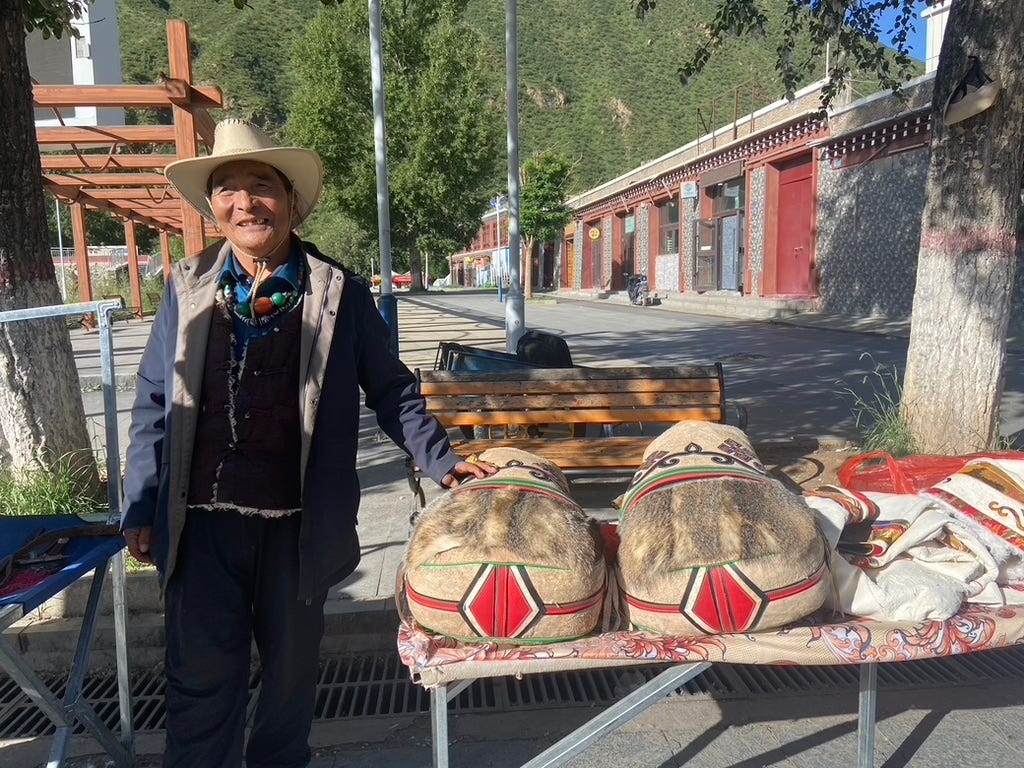
Monasteries belong to the daily life of these towns. Monks go about their day. People come to pray, walk their circuits and turn the wheels. In Dege, the printing house adds another expression of that living culture.
This is one reason we prefer travelling through Sichuan and Qinghai. There is room to follow smaller roads and shape the journey around the people and places we encounter. Travel in the Tibet Autonomous Region requires a special permit and an organised tour. Here, we have greater flexibility, while checking local access conditions for each journey.
Yaks, horses and the happiness of distance
For long stretches of the higher route, we travel at around 4,000 metres. The air is thin. The distances are large. Eagles circle overhead, and vultures are part of the highland landscape.
Across the grasslands are yaks, horses, nomadic tents and yurts. Animals and weather give the land movement. The scale takes a little longer to absorb.
We find a particular happiness in that openness. There is space for your eyes to travel, and time for your thoughts to follow. A bend in the road can reveal another valley and another stretch of grassland, and we are quite happy to keep looking.
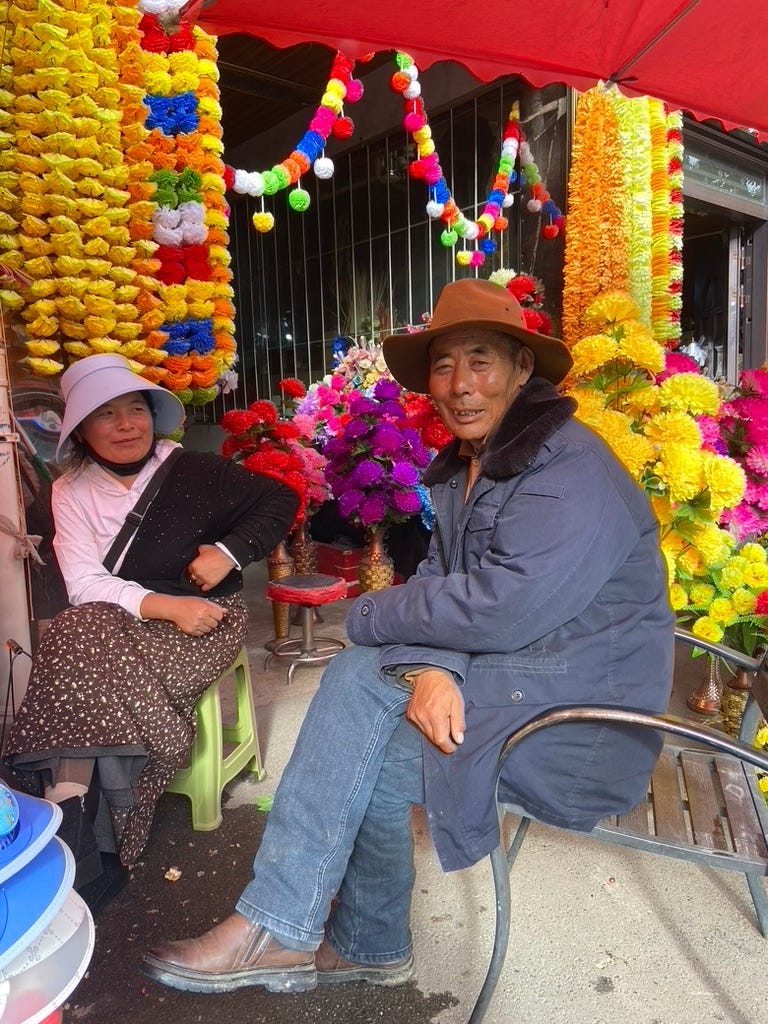
August can bring the excitement of horse racing. For a summer journey, we check local festival calendars to see what might fit. Dates and routes need to work together.
Our road deliberately leaves Shangri La and Tiger Leaping Gorge out of the itinerary. We find the quieter towns, the Maowu Canyon and the roads deeper into the highlands far more rewarding for the kind of journey we want to share.
And then, Chengdu
Chengdu gives the journey a wonderfully different energy.
Start with noodles. There are many ways to eat well in this city, and a good bowl is an excellent way to begin. Later, hotpot brings its own demands on your attention, appetite and tolerance for chilli.
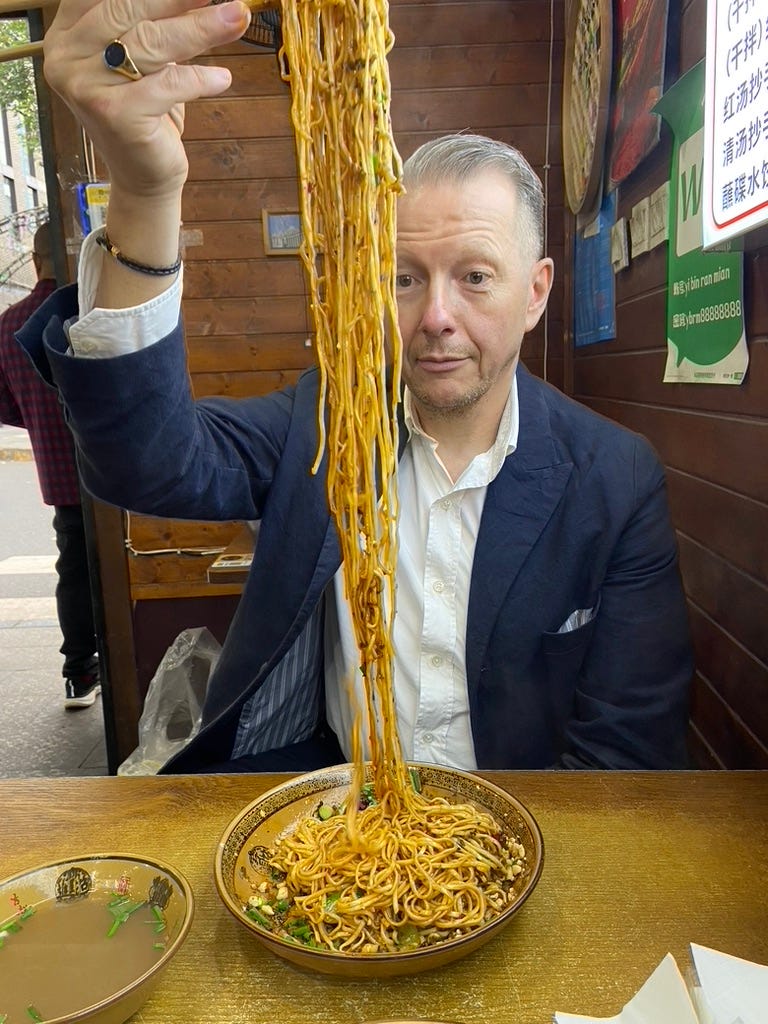
Pandas deserve their place in the programme. So does Sanxingdui, where the extraordinary bronze faces open a very different window onto this part of China.
Then there is baijiu. A working distillery in the middle of the city makes this spirit feel very much part of Chengdu itself. Even for people who are uncertain about the taste, the craft and history are worth exploring.
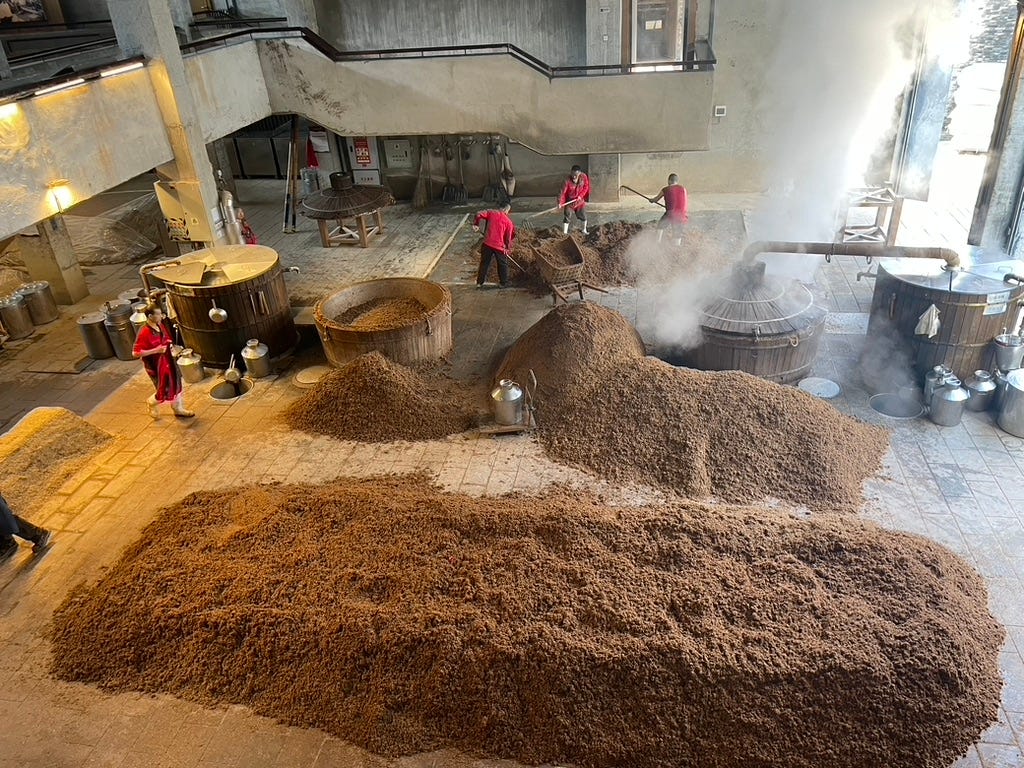
And the bars. In our opinion, Chengdu has the best bar scene in China. We love the creativity, the people and the ease with which an evening can develop.
There is something about the city’s temperament that keeps drawing us back. People seem comfortable enjoying themselves. They make time for food, conversation and a good night out.
We sometimes wonder whether the proximity of the mountains has something to do with it. That is our own theory. Spending time in both places is a pleasurable way to consider it.
Come with us
We have brought these places together in Sichuan: The Tibetan highlands, a private journey of 13 days and 12 nights, personally driven and guided by the two of us, Andrea and René.
The route connects Lijiang with Chengdu and can run in either direction. You can begin with the city or arrive there after the highlands.
Starting in Lijiang, the first day is for arrival, Shuhe and, as time and energy allow, Wenhai. We stay at The Bivou, a boutique hotel in Shuhe, and take the beginning gently.
The road continues through the spectacular Maowu Canyon to Batang and Dege, with one night at each stop. Two nights in Yushu give us time for Tibetan culture and everyday life. Madoi then takes the journey into the Yellow River headwater highlands of Qinghai, before two nights at Azara in the grasslands of Ngawa.
Chengdu has three nights. We arrive on day ten, have two full days for the city and its surroundings, and depart on day thirteen.
Most hotels are comfortable middle class properties. The Bivou brings boutique character to the start, and Azara is the special hotel stay in the highlands. We use an SUV for two guests and a comfortable seven seat vehicle for four.
April to November is the travel window. The grasslands change with the seasons, so we discuss the timing around what you most want to experience. We aim to avoid the busy holiday periods in early May and early October. This is a road journey with substantial drives and high altitude sections, which we discuss carefully before booking.
The price per person is EUR 5,700 for two guests sharing one double room, or EUR 3,200 for four guests sharing two double rooms.
Our all inclusive arrangement covers accommodation, all meals, nonalcoholic drinks and snacks, our personal guiding and driving, vehicle costs and insurance, airport transfers, and entrance fees and any permits required for the agreed programme. Oxygen is carried for the highland section.
Alcohol, flights to and from the journey, visas if required, personal travel medical insurance and personal spending are additional.
If this sounds like your kind of journey, tell us what draws you to the highlands. We can talk through the season, the direction and the places you would most like to spend time.
Andrea & René